
Get a Free Quote


Why Lake Travis Makes Boat Lift Choice Especially Important
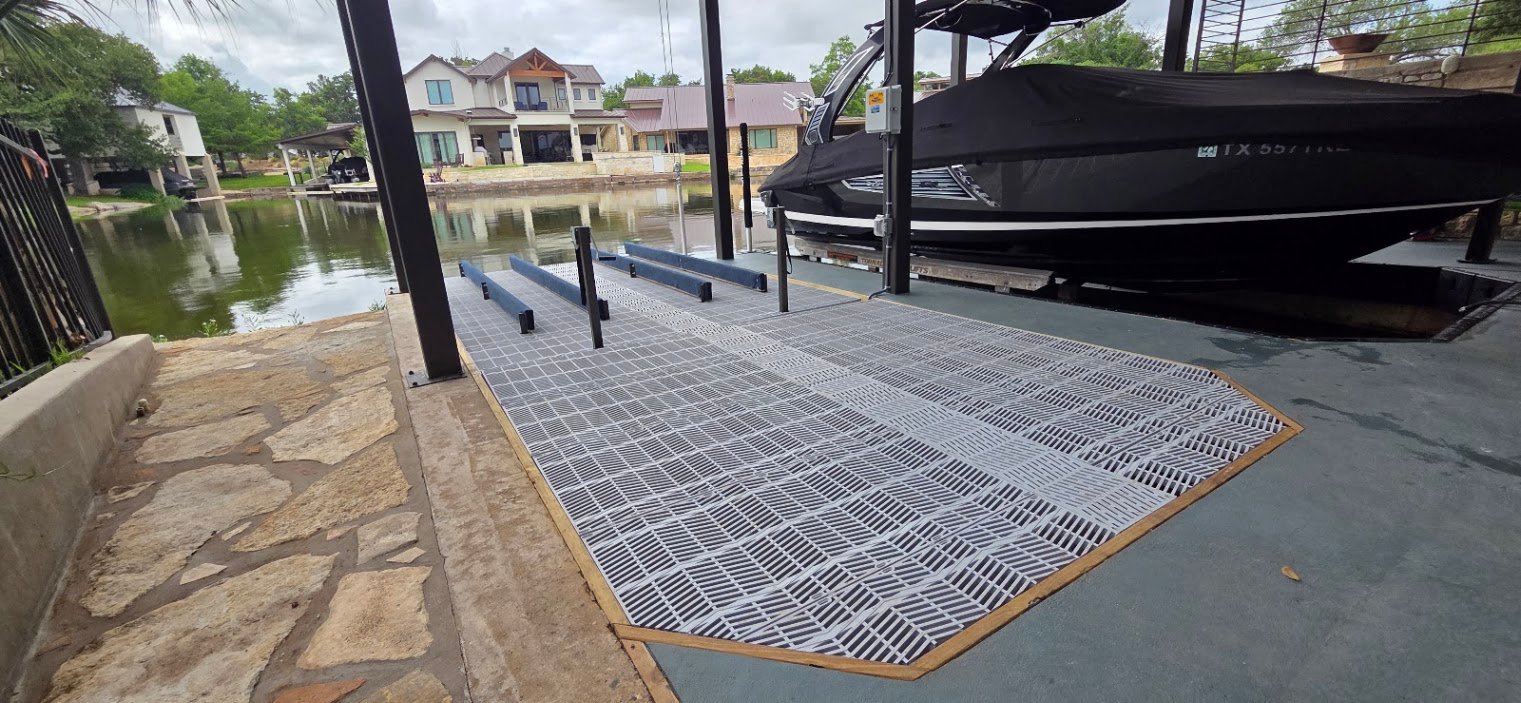
Lake Travis is a managed reservoir that can swing more than 80 feet between drought and flood years, which makes lift placement more important here than on a typical lake. A lift installed for full-pool conditions can end up too short to reach the water during a drawdown, while a lift built for low water can be overwhelmed if the lake rises quickly after heavy rain. Getting the lift height and placement right for your specific spot on the lake, not just the boat, is what keeps it usable through the widest range of conditions. Getting this right from the start avoids a lift that only works for part of the year.
Areas we serve
- Lakeway
- Lago Vista
- Bee Cave
- Spicewood
- Volente
- Point Venture
- Briarcliff
Frequently Asked Questions About Boat Lifts in Austin, TX
How do I know what weight capacity my boat lift needs?
A lift should be rated well above your boat’s dry weight, accounting for fuel, gear, and any accessories left aboard, since underestimating capacity puts unnecessary strain on the motor, cables, or hydraulics. Manufacturers typically recommend at least 10 to 20 percent of extra capacity beyond the boat’s actual loaded weight, and an in-person assessment can confirm the right rating and lift type for your specific boat.
Is a hydraulic lift worth the extra cost over a cable lift?
It depends on the boat and how much upkeep you want to take on. Hydraulic lifts cost more upfront but handle heavier boats more smoothly and put less repeated stress on moving parts. Cable lifts are more affordable and work well for small to mid-size boats, but need more frequent inspection since the cables see continuous tension and wear. For a lighter boat, the cost difference often isn’t worth it; for a heavier one, it usually is.
How often does a boat lift need maintenance?
An annual inspection is a good baseline for any lift type, covering motor performance and structural connections to the dock. Cable lifts benefit from more frequent cable tension and wear checks since they’re under constant load, while hydraulic lifts should be checked for fluid leaks or pressure loss. Lifts used heavily through boating season often benefit from a mid-season check as well.
Can a boat lift be added to a dock that doesn’t already have one?
Often, yes, though it depends on whether the existing dock structure can support the added weight and stress of a lift system. Some docks need reinforcement to framing or pilings before a lift, especially a heavier hydraulic system, can be safely installed. An in-person assessment of the dock’s current condition is the best way to determine what’s needed before installation begins.
Can I add a PWC lift next to my existing boat lift?
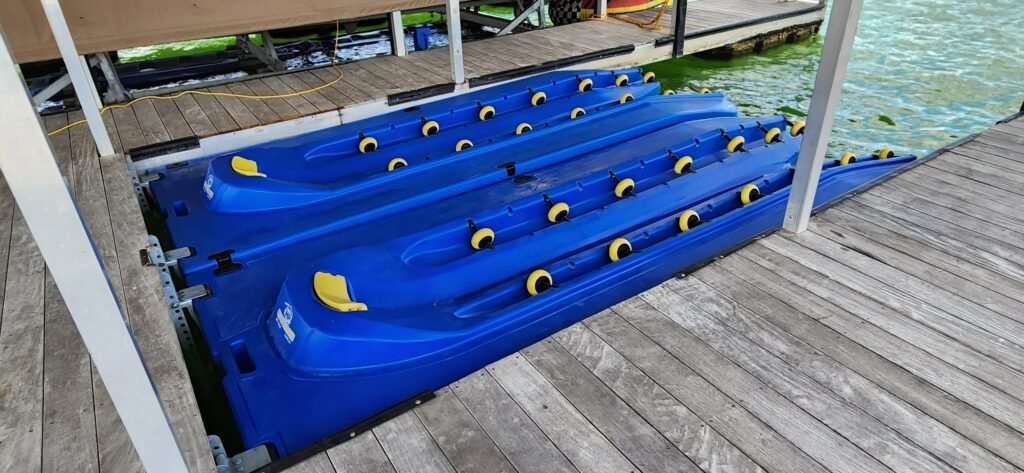
Yes, this is one of the most common additions homeowners make. A PWC lift can typically be installed alongside an existing hydraulic or cable lift, giving a jet ski or other personal watercraft its own dedicated spot rather than sharing space with the main boat. Dock layout and available space are usually the main factors in where it can go.
Can I add a remote control or canopy to an existing boat lift?
In most cases, yes, on hydraulic and cable lifts alike. Remote controls, canopies, and solar power kits can often be added to an existing lift without replacing the whole system, as long as the lift’s structure and motor can support the upgrade. An in-person look confirms whether your current setup is compatible or whether some components need to be upgraded alongside the addition.
Still have a question about your boat lift? Call (512) 636-6660 and we’ll walk you through it.